Original 2024 Essay
The Backrooms and Liminal Spaces — Intro
“The Backrooms”[1] and creepy liminal spaces have gained significant popularity in online communities, blending elements of horror, surrealism, and urban legends. I, personally, have recently become fascinated with it all. Here's a breakdown of these concepts:
The Backrooms
Origin: The Backrooms [2] originated from a post on the internet, specifically from a thread on 4chan[3] in May 2019. It was part of a thread where users were asked to post “disquieting images that just feel 'off.'” One user posted an image of a poorly lit, yellow-colored room with stained carpeting and buzzing fluorescent lights. The image, combined with the caption, created an eerie narrative:
“If you're not careful and you noclip out of reality in the wrong areas, you'll end up in the Backrooms, where it's nothing but the stink of old moist carpet, the madness of mono-yellow, the endless background noise of fluorescent lights at maximum hum-buzz, and approximately six hundred million square miles of randomly segmented empty rooms to be trapped in.
God save you if you hear something wandering around nearby, because it sure as hell has heard you.”
Concept: “The Backrooms” are a vast, seemingly-infinite labyrinth of monotonous, uninhabited rooms and corridors, devoid of any human presence, but heavy with an atmosphere of isolation and dread. The environment is unsettling due to its familiarity (resembling generic living rooms, basements, office spaces, waiting rooms, etc...), combined with its surreal, almost nightmarish qualities. The Backrooms are characterized by:
- Endless corridors and rooms: These spaces go on forever, often repeating with slight variations.
- Monotone and outdated design: The walls, carpet, and lighting evoke a sense of dread due to their blandness and decrepitude.
- Isolation and paranoia: The Backrooms evoke feelings of loneliness and being lost, with the ever-present fear of something lurking just out of sight.
Levels and Entities: Over time, internet communities have expanded “The Backrooms” into a complex mythos, adding different “levels” with unique characteristics, hazards, and entities. Some levels may be more dangerous, filled with hostile entities, while others might seem safer but still carry an underlying sense of unease.
Creepy Liminal Spaces
Definition: Liminal spaces[4][5][6] are locations that are transitional or between states. They are often places that evoke a sense of eeriness or unease because they feel both familiar and alien at the same time. Common examples include:
- Empty finished basements or other house rooms
- Empty parking lots at night
- Deserted hallways or corridors
- Closed or abandoned buildings
- Train stations late at night with no one around
- Schools or malls after-hours
- Abandoned kiddy funhouses
- Empty tiled pool rooms
Characteristics:
- Familiar, yet unsettling: These spaces are usually familiar environments that people recognize, but are presented in a way that feels ‘off’. They might be devoid of people, poorly lit, and/or shown at an unusual time (for example, a school hallway late at night).
- Sense of transition: Liminal spaces are often ‘in-between’ areas where people don't usually linger, such as stairwells, waiting rooms, or empty streets. The feeling of being “in-between” contributes to the sense of unease.
- Atmosphere: The atmosphere in liminal spaces is typically one of stillness, emptiness, and isolation. There’s often a sense of waiting or anticipation, as though something is about to happen... but it never does.
Psychological Impact: Both “The Backrooms” and liminal spaces tap into deep psychological fears: the fear of being lost[7], the fear of isolation[8], the fear of the unknown, and more. They resonate with the uncanny, where something is both familiar and alien at the same time, creating a disorienting and disturbing experience.
There is a lot of psychology that goes into liminal spaces. Some, such as kenopsia, an elegiac aura, anemioa, kenophobia, and metanostalgia. Here are what these terms mean:
- Kenopsia[9]: a feeling of eeriness or forlornness that can be experienced when visiting a place that was once full of people but is now abandoned and quiet. For example, an unlit office on a weekend, a vacant fairground, or a school hallway in the evening
- Elegiac (“el-uh-jy-ick”) aura: “Something that is elegiac expresses or shows sadness[10]. Most pictures in this [part of the] iceberg contain elegiac auras, as their presence provokes a saddening or even dark feeling. Places that you have been to while you’re young, something you might have explored endlessly... These elegiac auras exist because you’re looking at a place that gave you a feeling you will never experience again.”
- Anemioa (“an-eh-moy-uh”): “Anemioa is a nostalgia for a time you’ve never known. When looking at these photos, you might experience this weird feeling. Many people tend to feel nostalgic, even though they never actually visited the place. Anemioa might be caused by normal nostalgia, as our memory is usually very inaccurate.”
- Kenophobia: a fear of empty spaces
- Metanostalgia: Nostalgia for nostalgia itself, or longing for the way something made you feel in the past, even if the original experience wasn’t particularly significant. This is often felt when revisiting liminal spaces that evoke strong memories or emotions.
And there are many more of these psychological terms that can happen with “The Backrooms” and liminal spaces. These terms help us articulate the complex emotions we experience when encountering The Backrooms and liminal spaces, making it easier to understand why they resonate so deeply.
The unease felt in liminal spaces is tied to several other psychological and emotional factors:
- The “Uncanny”: Liminal spaces are often uncanny—they are familiar enough to recognize, but something about them feels off. This creates a sense of cognitive dissonance and discomfort.
- Isolation: Being alone in a space that is normally populated can amplify feelings of loneliness and vulnerability. The absence of other people creates an atmosphere of abandonment or desolation.
- Temporal Displacement: Liminal spaces often feel as though they are outside of normal time. This might be due to the absence of natural light, the stillness, or the feeling that you are in a place where time doesn’t pass in the usual way (although, this is obviously a feeling, not something real).
- Nostalgia and Memory: Sometimes, liminal spaces can evoke a strange sense of nostalgia, reminding us of places from our past that we can’t quite place. This can lead to a haunting feeling, as though we are encountering a forgotten memory or a place that exists only in dreams.
Cultural Impact
The Backrooms and liminal spaces have inspired a wide range of creative works, including:
- Short stories and creepypasta: Many horror stories have been written that explore these concepts, often describing encounters with the strange entities or experiences within these spaces.
- Videos and games: The Backrooms have been recreated in video games, short films, and YouTube videos, often with first-person perspectives that heighten the sense of immersion and terror.
- Art and photography: Artists have been drawn to the aesthetic of liminal spaces, creating unsettling images that capture the eerie beauty of these environments.
These concepts reflect a modern form of horror that is more psychological and atmospheric, relying on the unsettling nature of the environments themselves rather than traditional monsters or gore.
Why These Concepts Resonate
Both “The Backrooms” and liminal spaces resonate with people because they tap into universal fears: Fear of the unknown, fear of isolation, fear, ambiguity, & cognitive dissonance of the uncanny, and more. They also play with our perception of reality, blurring the lines between what is real and what is imagined, what is familiar and what is strange. This makes them powerful tools for storytelling, art, and horror, as they engage with the deep, often subconscious, aspects of our psyche.
So, to recap what I’ve shared, so far, and add some more context:
As the lore says, “The Backrooms” are a liminal space just outside our reality that you can’t escape from. Liminal spaces are essentially the “uncanny valley”[11], but for places instead of people. “Liminal” just means being at the edge of something new, right before it really starts; the in-between; the uncertainty that occurs after something has just finished, but the next thing hasn’t started yet.
A liminal space is just an in-between area; a setting that appears to be transitioning from one phase to another, like a finished basement before someone moves in, an empty school hallway at night, or an office without furniture. Look at these spaces, and there’s something missing. There are no people, no focal point... almost like a place that we shouldn’t be looking at, which makes it feel somewhat unsettling. Creepy, yet... oddly familiar — hence, the “uncanny valley” aspect.
They usually come with a sense of nostalgia for a place from your childhood, or even a dream that you so vaguely remember. The original viral liminal space was this one, in Figure 01:
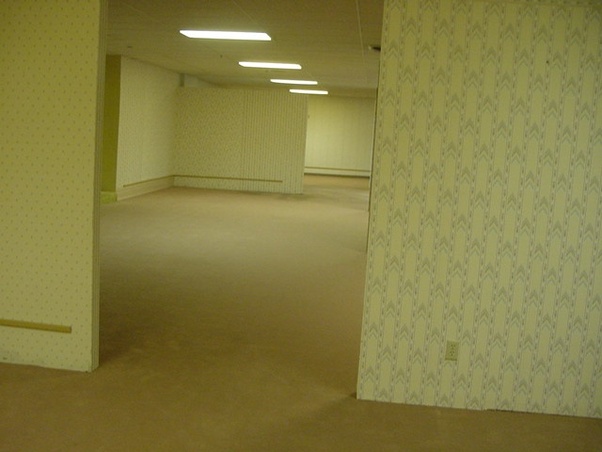
...An unsettling image that just felt ‘off’, and we can’t quite put our finger on why. Strangely familiar, but also a little uncomfortable to look at. This particular liminal space became known as “The Backrooms”, a place that you can fall into if the conditions are just right.
So, [as the lore goes,] you can consider the reality you’re in right now, “The Frontrooms”. And if you’re not careful, you can accidentally ‘noclip’ out of this reality in the wrong areas, and end up in the Backrooms. “Clipping” is a video game term, referring to two objects going inside of each other. “Noclipping” just means passing through the boundaries of playable area and ending up outside of the game’s world. And “The Backrooms” is what they say we’d find if we ‘noclipped’ out of our reality. Weird, yellow-tinted rooms with musty carpets and endless fluorescent lights, that are, according to lore, 600,000,000 square miles (triple the total surface area of of Earth, ~197,000,000 square miles); a liminal space that goes on, for all intents and purposes... forever.
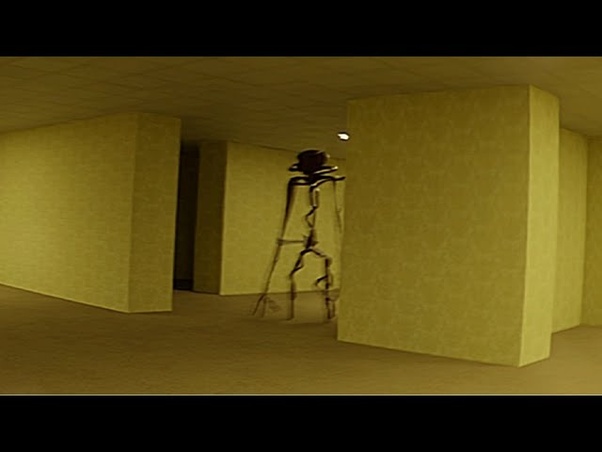
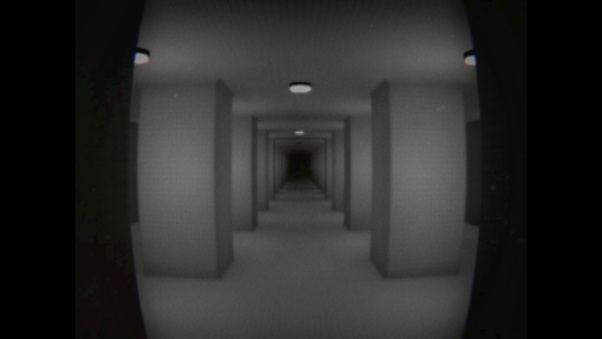
These signature Backrooms gained popularity through a viral video series by Kane Parsons (YouTube profile, “Kane Pixels”) called “The Backrooms”, shot through a lo-fi VHS-style filter, which adds to the nostalgia factor. Even coming across other spaces, like an abandoned apartment courtyard or the empty basement.[12]
Now... a lot of the real places from these popular Backrooms/liminal space pictures have been found. For example, the original Backrooms picture has been found, and it's in a building somewhere in Wisconsin, and it's now been converted into a remote control race track.
...So, does that ruin the fictitious parts of “The Backrooms” for some people? Yes. But regardless:
- It’s not as much the fictitious parts of The Backrooms that interests me and that I’m talking about here. A lot of this (like “entities” being in the backrooms, “noclipping” through reality, endless rooms, and all of that stuff) is obviously not real. But there are the very real parts about it:
- Sure, the majority of The Backrooms stuff is fake. But liminal spaces are as real as trees or iPhones or you or me, they are a very real thing. Liminal spaces can be very cool and scary and nostalgic, and the nostalgia that they bring can be very nice and euphoric. And some of those terms that I’ve mentioned above, like kenopsia (a feeling of eeriness that can be experienced when visiting a place that was once full of people but is now abandoned and quiet), an elegiac aura (something that expresses or shows sadness; places that you have been to while you’re young, something you might have explored endlessly), kenophobia (a fear of empty spaces) and more, are also very real.
Now... one thing that I’ve been wondering is: A lot of this, The Backrooms, and certain liminal spaces, fits well for “younger” people (which I’d say, for all intents and purposes, are people born from the ~1980s-2010s), partially because of certain architecture, building/room types, decor, and some certain types of shared experiences that they have from their life (especially in their earlier childhood). But what about for those born before those times? Do they still experience the feelings that The Backrooms and certain connected liminal spaces provoke? Do they “get” it? Do they know what we mean with all of this, and understand and/or have the same kind of feelings about this as we seem to have?
Please, do share your experiences and your thoughts on this. Whether it is as a comment on this intro post (or other future posts in the Space), or your own post here, or even a DM to me... I’m really wondering how this works and what you feel, for people born before the 80s or 90s or so. And again, not as much the fictitious parts, but how the very real parts of liminal spaces and the rest of the nonfictional aspects of are perceived by you, and what experiences, if any, you have with it all.
And to end this off: I will be posting more about The Backrooms and liminal spaces in the Space. Sometimes, just pictures of liminal spaces, or more “lore” or delving deep into certain aspects of liminal Spaces. And I invite others to share in this Space as well. (Please note that all prospective submissions should be okayed by me, before they’re even sent as submissions to the Space.) So feel free to follow this Space and turn on the Space’s notifications, and to follow along!
Footnotes
- The Backrooms - Wikipedia ↩
- r/backrooms ↩
- The origin of the Backrooms was a post on 4chan ↩
- Liminal space (aesthetic) - Wikipedia ↩
- Can someone explain liminal space like I’m five? ↩
- Liminal space - Dictionary.com ↩
- Primal Fear: The Psychology of Being Lost ↩
- Autophobia - Wikipedia ↩
- Kenopsia - The Dictionary of Obscure Sorrows ↩
- Elegiac - Wikipedia ↩
- Uncanny valley - Wikipedia ↩
- Original linked TikTok video ↩